SINEJAN BUCHINA
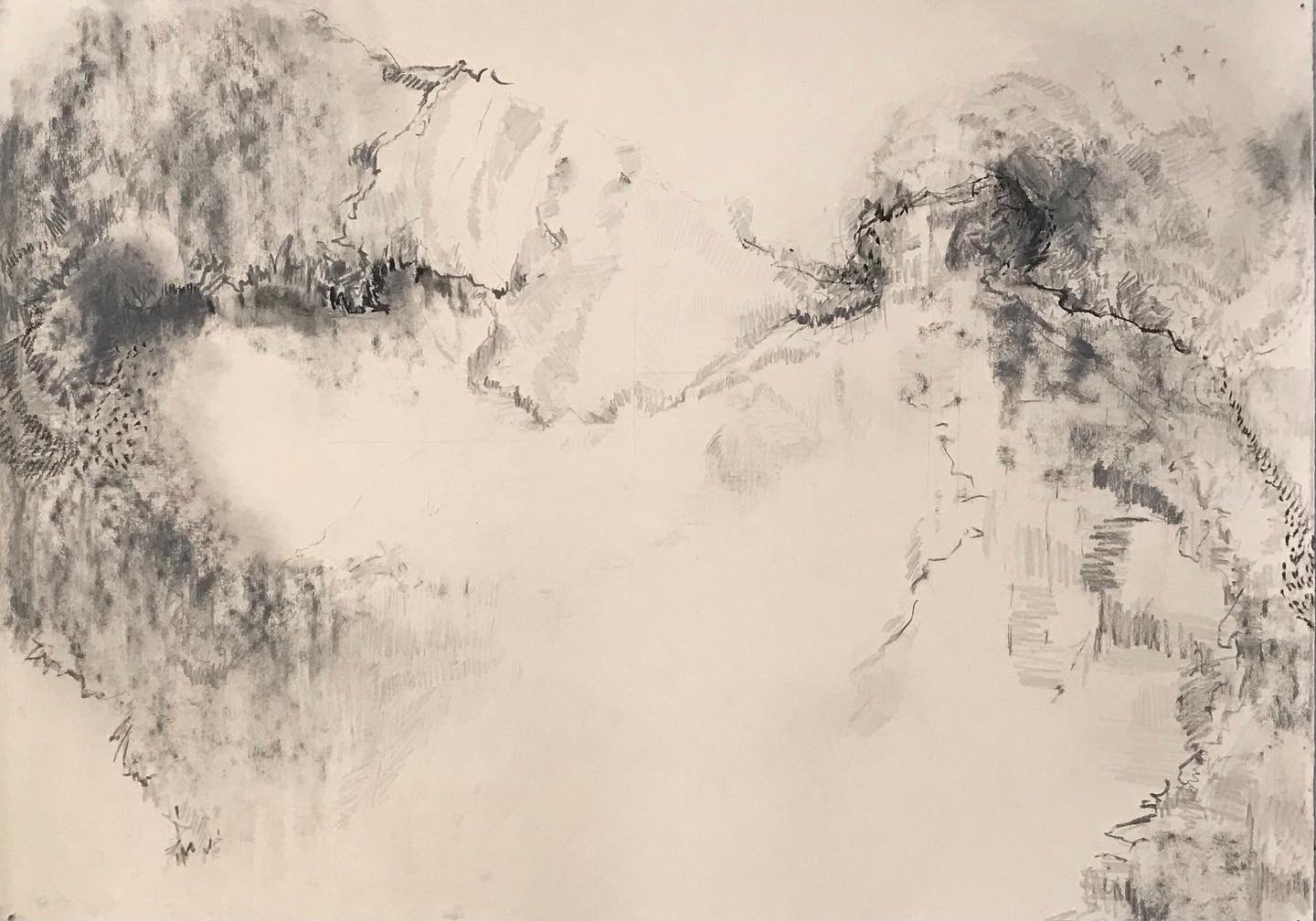
SUUL - 1
PAINTING-DRAWING
2023
My interest lies predominantly in transnational identities, historical narratives, de facto state landscapes, and (their) concepts of belonging. In my work, I reconstruct the borders of unrecognized countries (Abkhazia), and contested regions (Zugdidi). I use topographic and political mapping to investigate my focus on issues of borders and displacement.
My research and practice is focused on the idea and reality of unrecognized territories, statelessness, quasi and/or de-facto states, non-space, and the ways in which an individual can or cannot insert oneself into a condition of acceptance.
As a woman artist who works with unconventional materials such as organic and synthetic pigments, rusted metal (oxides and hydroxides of iron), plants, wood, spices and found objects, I have often dealt with assumptions about my gender based on my work’s material quality. These (my) choices and techniques tend to go against the progressive idea of constructive gender theory. This is a similar dilemma with women artists who work with textile and weaving, which are often considered “womanly” work. As a woman painter who has been gendered stereotyped and assumed my paintings as “masculine” and whereas my new body of works (drawings) as “feminine.”
These drawings are the result of a condition I have developed during pregnancy called Carpal Tunnel Syndrome, which disappeared after birth but came back again a year later. It is numbness, a tingling pain in one or both hands, pressure on a nerve in your wrist and fingers leaving you with little to no sensation.
The drawings are the maps of the places I have visited during my walks. As I have them sketched in my notebook, I will have to re-draw them at my studio. Even though the drawings are made with and from very sensational, emotional, mental and physical states of my landscape walks, I had no physical sensations while transferring them to a big surface on papers at my studio as a result of the condition.
